My Blogs
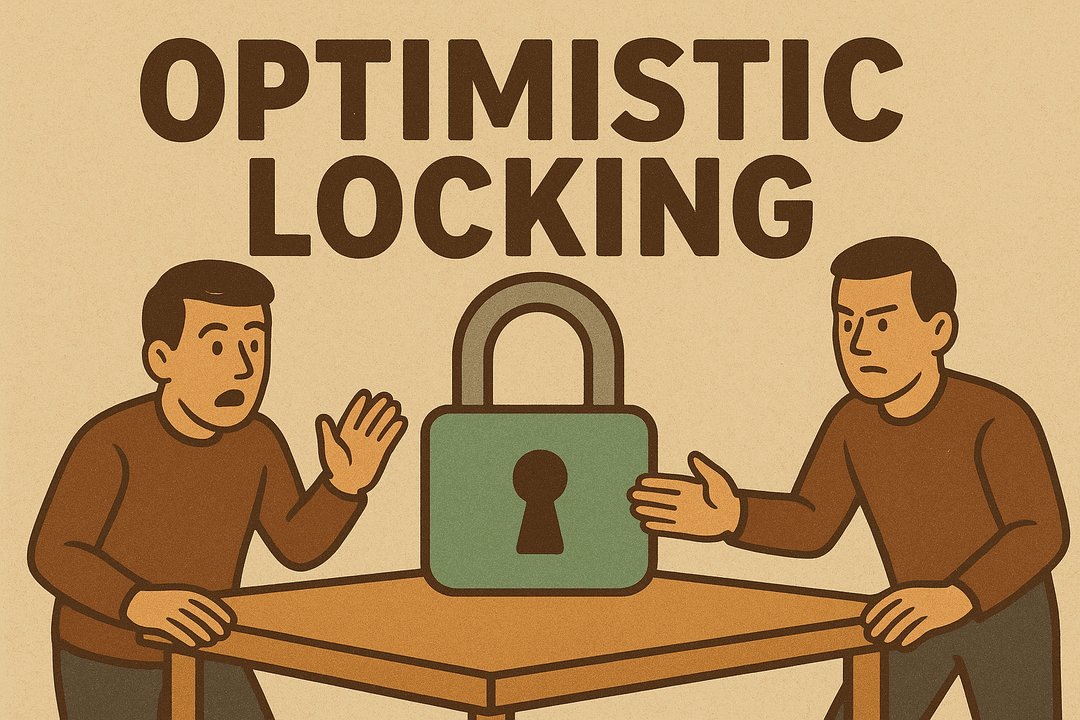
Avoid double booking using optimistic locking
Ever faced the classic “last write wins” nightmare in your database? That sneaky situation where two users edit the same record, and one update silently wipes out the other? In this post, I break down optimistic locking — a clean, lightweight way to prevent data overwrites without resorting to heavy locks. With a simple version field in your schema and a check before updates, you can keep your app consistent while still fast.

How to build end-to-end encryption using Node.js
In a world where data breaches are more common than Monday blues, End-to-End Encryption (E2EE) is your best bet to keep sensitive messages private. But how does E2EE work? And how can you build it into your app? Let’s break it down like a true dev wizard with examples, memes, and minimal crypto jargon.
How I Reduced Load Time on Low-End Devices
Let’s be real, optimizing for performance isn’t about slapping “lazy” on a component and calling it a day. It’s a battle between the bundle size, the design team’s pixel-perfection, and the guy who insists on loading Lottie animations from a CDN. But when your users are running on 2GB RAM phones with Chrome eating half of it, you can’t afford sloppy performance. Here’s a breakdown of how I brought down load time by ~300ms without sacrificing interactivity, aesthetics, or maintainability.

React Google Login and Node.js implementation
This tutorial demonstrates how to implement Google social login in a React app with proper backend token verification using Node.js. It uses react-google-login on the frontend to get an OAuth token and sends it to the backend, where the google-auth-library verifies it and retrieves user details. Upon successful login, a toast and confetti are shown to enhance user experience. The backend handles token verification and can be extended to include database operations.
QR Code Implementation in React.js in 5 mins.
This tutorial explains how to implement QR codes in a React.js application using the qrcode.react NPM package. It guides you through creating a React app, installing the package, and rendering a QR code by providing a string value via the value prop. The QR code can be displayed as an SVG or canvas, and additional customization options are available in the package documentation.